The Viral ‘Guilty Cat’ Myth
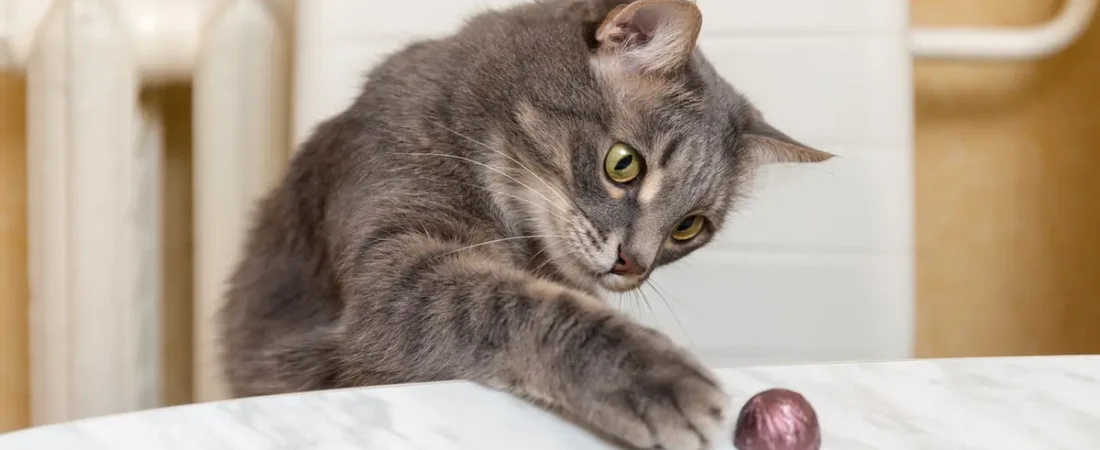
One of the most famous internet cat tropes is the “guilty cat” sitting next to a broken object, looking away as if it understands wrongdoing. This behavior is often interpreted as evidence that cats feel guilt or shame.
However, scientific observations suggest a very different explanation. Cats do not process moral concepts like guilt in the same way humans do. Instead, their behavior is driven by association, stress response, and body language signaling.
The internet has amplified these moments into memes that reinforce the illusion of feline guilt.
Why Cats Knock Things Over
Cats often push objects off tables, shelves, or counters for several reasons.
Curiosity is a major factor. Cats use their paws to explore objects and test their environment.
Movement response is another factor. If an object reacts or falls, it triggers further investigation.
Some cats also engage in attention-seeking behavior, especially if they learn that humans react strongly to certain actions.
Importantly, this behavior is not intentional destruction but exploratory interaction.
The Misinterpretation of ‘Guilt’ Behavior
After knocking something over, cats may display what humans interpret as guilt-like behavior.
This includes avoiding eye contact, lowering the body, or slowly moving away.
However, these actions are more accurately explained as conflict-avoidance signals.
Cats are sensitive to human emotional tone and body language. If they detect tension or loud reactions, they may withdraw to reduce potential conflict.
This withdrawal is misread as guilt by humans.
Stress and Post-Event Behavior
When a cat experiences a sudden loud reaction from a human, it may enter a mild stress state.
This can trigger freezing, slow movement, or avoidance behavior.
These are survival-based responses designed to reduce threat exposure.
The cat is not reflecting on its actions but reacting to the emotional environment.
Human Projection and Emotional Interpretation
Humans naturally project emotions onto animals, especially pets.
This is called anthropomorphic bias, where human traits are assigned to non-human behavior.
When people see a cat near a broken object, they automatically construct a narrative of intention and guilt.
This narrative makes the scene more relatable and emotionally engaging, which is why it spreads easily online.
The Role of Eye Contact Avoidance
Avoiding eye contact is one of the most commonly misinterpreted signals.
In cats, direct staring can signal tension or challenge.
Looking away is often a calming or de-escalation behavior.
After a disruptive event, cats may avoid eye contact simply to reduce perceived confrontation, not because they feel ashamed.
Body Posture and Submission Signals
Cats may lower their body or crouch after a loud noise or human reaction.
This posture is a defensive and non-threatening signal.
It communicates: “I am not a threat.”
Humans often interpret this as sadness or guilt, but it is actually a survival-based communication strategy.
Why the Meme Became So Popular
The “guilty cat” meme became popular because it fits perfectly into human storytelling patterns.
It creates a clear cause-and-effect narrative: cat breaks object → cat feels guilty.
This simple structure is easy to understand and emotionally engaging.
It also allows humans to assign personality and intention to the cat’s behavior.
Cats and Cause-Effect Learning
Cats do not understand moral wrongdoing, but they do learn cause-and-effect relationships.
If knocking something over leads to a loud reaction, they may associate the action with discomfort or stress.
However, this is not moral learning but behavioral conditioning.
Over time, some cats may avoid similar actions simply to avoid negative outcomes.
Attention-Seeking Misinterpretation
Some cats knock objects over repeatedly because they learn it triggers human attention.
Even negative attention can reinforce behavior if it consistently results in interaction.
This creates a feedback loop where the cat repeats the action to gain engagement.
This is often mistaken as mischievous intent, but it is actually learned association.
The Freeze Response Explained
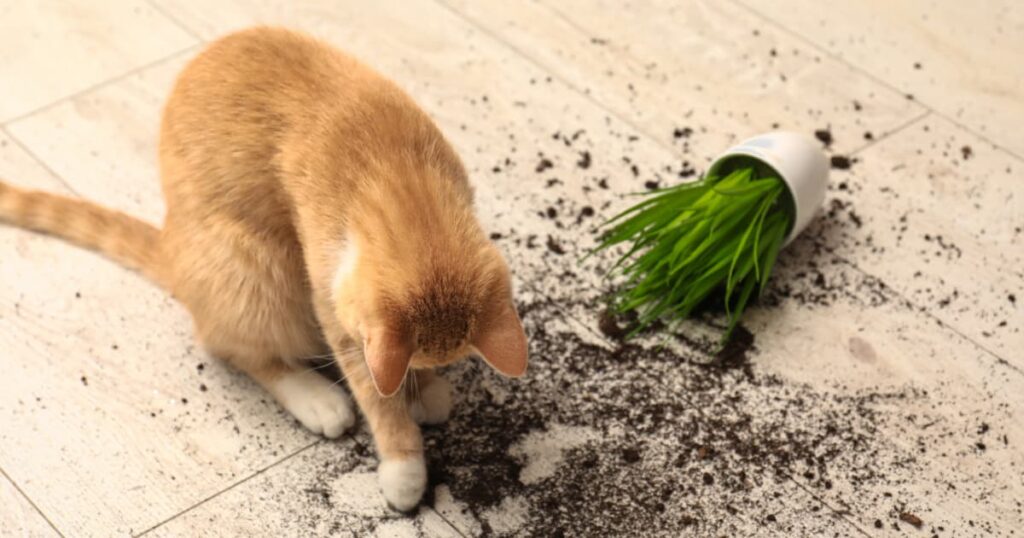
After a sudden event, cats may freeze in place.
This is a common survival mechanism in prey animals.
Freezing reduces detection risk and allows assessment of the environment.
In domestic settings, this behavior appears as stillness or awkward posing next to the scene of the incident.
Cultural Reinforcement of the Guilty Cat Image
Internet culture has reinforced the idea of cats feeling guilt through repeated memes and captions.
Over time, audiences begin to interpret similar behavior through this established lens.
This is an example of cultural conditioning influencing perception of animal behavior.
Why Cats Do Not Experience Guilt Like Humans
Guilt in humans involves complex self-awareness and moral reasoning.
Cats operate primarily on instinct and immediate experience.
They do not evaluate actions based on moral frameworks but rather on comfort, safety, and reward.
Therefore, the emotional concept of guilt does not apply in the feline cognitive system.
How Owners Should Interpret This Behavior
Instead of assuming guilt, owners should view post-incident behavior as stress response or environmental reaction.
Calm responses and consistent training are more effective than punishment.
Redirecting behavior and providing appropriate stimulation reduces unwanted actions.
Understanding feline psychology improves communication and reduces misunderstandings.
FAQ
Do cats feel guilty after breaking things?
No, they respond to human reactions, not moral guilt.
Why does my cat look away after doing something wrong?
It is a stress or de-escalation behavior, not guilt.
Why do cats knock things over repeatedly?
Curiosity, exploration, or attention-seeking behavior.
Can cats understand punishment?
They understand consequences but not moral punishment.
Is the guilty cat meme real behavior?
It is a human interpretation of stress-based feline signals.
Conclusion
The “guilty cat” phenomenon is a perfect example of how human psychology shapes interpretation of animal behavior. Cats do not experience guilt in a human sense, but their natural stress responses, avoidance signals, and learning patterns create situations that appear emotionally meaningful. Internet culture transforms these moments into relatable and humorous content, reinforcing one of the most iconic cat memes in digital history.