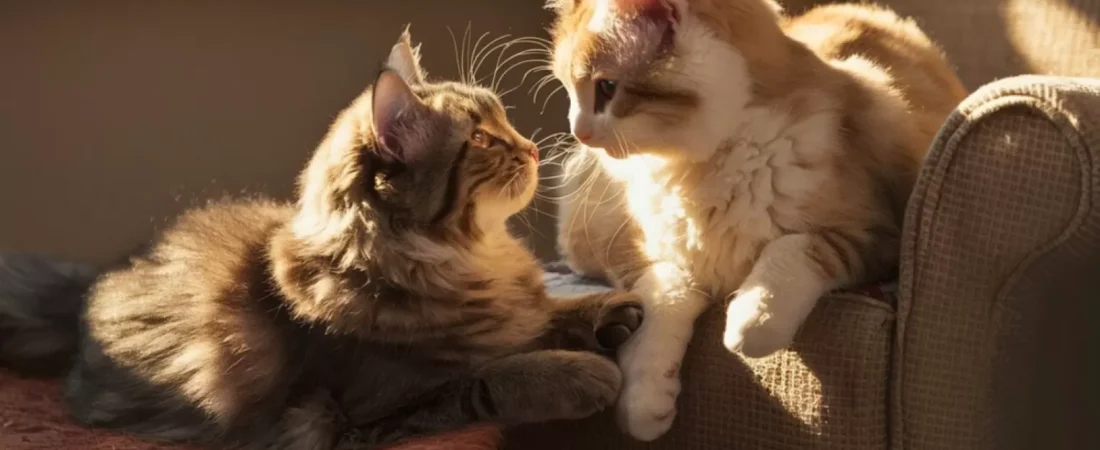
Why Cat Cuteness Often Looks Funny
Cats occupy a unique space in animal behavior where cuteness and comedy overlap. Many actions that appear funny to humans are actually rooted in natural feline instincts, body mechanics, or communication signals.
A cat slipping off a sofa, freezing mid-jump, or squeezing into a small box is not trying to be funny—yet these moments trigger strong emotional reactions in humans.
This happens because cat behavior often combines unpredictability, exaggerated movement, and expressive body language, which the human brain interprets as humorous.
The Science Behind Funny Cat Behavior
Humor in cat behavior is largely a human interpretation, but it has biological and psychological triggers.
Humans are naturally drawn to unexpected outcomes that are non-threatening. When a cat performs a sudden awkward movement, it creates a harmless surprise effect.
This is known in psychology as benign violation theory—something is funny when it violates expectations but remains safe.
Cats constantly generate these situations because of their agility, curiosity, and rapid reaction style.
The Role of Clumsiness in Cat Cuteness
Despite being skilled hunters, cats often appear clumsy in domestic environments.
This is because indoor spaces are filled with slippery surfaces, narrow furniture edges, and unpredictable obstacles.
A cat may attempt a precise jump but miscalculate distance slightly, resulting in a comedic landing.
These moments highlight the contrast between feline grace and occasional misjudgment, which humans find especially entertaining.
Box Obsession and Spatial Humor
One of the most famous examples of funny cat behavior is their obsession with boxes.
Cats will sit in boxes that are far too small, ignoring comfortable open spaces nearby.
This behavior is rooted in survival instincts. Enclosed spaces provide safety and warmth.
However, when cats attempt to fold themselves into extremely small containers, the result appears humorous due to their flexible bodies and determined expressions.
Freeze Reactions and Sudden Stillness
Cats often freeze suddenly when they detect movement or sound.
This behavior is part of their hunting strategy, allowing them to assess threats or prey.
To humans, the sudden statue-like stillness of a cat in the middle of action looks comedic.
The contrast between fast movement and complete stillness creates an unexpected visual effect.
The “Derp Face” Phenomenon
Cats sometimes display facial expressions that humans interpret as silly or exaggerated.
This includes wide eyes, slightly open mouths, or asymmetrical facial tension.
These expressions usually occur during high focus, surprise, or sensory overload.
While the cat is simply processing information, humans perceive it as humorous or cartoon-like.
Zoomies: Controlled Chaos Mode
One of the most entertaining cat behaviors is the sudden burst of energy commonly called “zoomies.”
During zoomies, cats run rapidly around the house, often in unpredictable patterns.
This behavior is caused by built-up energy release, especially in indoor cats.
Although it appears chaotic, zoomies help cats regulate physical and mental stimulation.
The speed, sudden turns, and unexpected stops make it highly entertaining for observers.
Failed Hunting Practice and Comedy Effect
Play behavior in cats is essentially hunting practice.
However, not every attempt is successful, especially when chasing toys or insects.
A cat may misjudge a jump, fall short of a target, or lose balance mid-pounce.
These “failures” create comedic moments but are actually essential learning experiences.
Cats refine their coordination and timing through repeated trial and error.
Sleeping Positions That Look Funny
Cats sleep in extremely flexible and unusual positions.
They may twist their bodies, hang limbs off furniture, or sleep upside down.
These positions are comfortable for them due to their flexible spine and joint structure.
Humans perceive these positions as humorous because they defy typical body posture expectations.
The Confused Cat Stare
Cats often pause and stare at objects, walls, or empty spaces.
This behavior is related to sensory processing, especially hearing or subtle movement detection.
To humans, the intense stare at nothing appears mysterious or comedic.
Memes often exaggerate this behavior as if the cat is “thinking deeply” or “seeing ghosts.”
Slippery Floor Adventures
Cats walking on smooth surfaces like tiles or polished floors sometimes lose traction.
Their paws are designed for grip on natural terrain, not slippery indoor materials.
When a cat slides slightly while walking, it often corrects itself quickly, resulting in awkward but amusing motion.
These micro-adjustments create the illusion of comedic clumsiness.
Vocal Comedy: Funny Cat Sounds
Cats produce a wide range of vocal sounds that humans often find amusing.
Chirps, squeaks, trills, and unusual meows can sound almost cartoon-like.
Sometimes cats vocalize at unexpected moments, such as while carrying toys or waking up suddenly.
These sounds are natural communication forms but become humorous in human interpretation.
Overreaction to Small Stimuli
Cats often react dramatically to small or harmless stimuli.
A tiny object falling, a reflection on the wall, or a soft noise can trigger intense focus or sudden movement.
This heightened sensitivity is part of their survival instinct system.
Humans interpret these reactions as exaggerated or funny due to scale differences.
The “Invisible Enemy” Behavior
Cats sometimes appear to chase or react to things humans cannot see.
This may involve dust particles, light reflections, or subtle sound frequencies.
From a human perspective, it looks like the cat is fighting invisible enemies.
In reality, their sensory perception is simply more sensitive than ours.
Dramatic Body Language Shifts
Cats can switch from calm to hyperactive in seconds.
One moment they are resting peacefully, and the next they are sprinting across the room.
This unpredictability contributes to their comedic appeal.
The sudden contrast creates a strong visual and emotional impact.
Interaction with Humans and Accidental Comedy
Cats often interact with humans in ways that result in funny situations.
They may sit on laptops, interrupt work, or walk across keyboards.
These actions are usually attention-seeking or curiosity-driven.
Humans perceive these interruptions as humorous because they occur at inconvenient but harmless times.

Object Manipulation Behavior
Cats use their paws to investigate objects in a delicate, almost playful manner.
They may push objects off tables repeatedly, not out of mischief, but curiosity about movement and sound.
This repetitive behavior is often seen as comedic but is actually exploratory learning.
The Contrast Between Elegance and Chaos
Cats are known for graceful movement, but they also display moments of unexpected chaos.
This contrast is what makes them so entertaining.
A single cat can appear majestic while walking and immediately switch to chaotic zooming behavior.
The unpredictability enhances their comedic appeal.
Human Emotional Response to Funny Cat Behavior
Humans experience dopamine release when observing unexpected but safe humorous behavior.
This creates positive emotional reinforcement and increases bonding with cats.
Cat videos and memes are popular because they repeatedly trigger this emotional response.
The combination of cuteness and humor creates a strong psychological reward.
Why Cats Don’t Know They Are Funny
Cats do not perform actions with the intention of being funny.
Their behavior is driven by instinct, curiosity, and environmental response.
Humans assign humor to these behaviors based on interpretation.
This mismatch between intention and perception is what creates entertainment value.
FAQ
Why do cats act so funny sometimes?
Because their instinctive behavior often conflicts with human environments, creating unexpected outcomes.
What are cat zoomies?
Sudden bursts of energy used to release physical and mental stimulation.
Why do cats look surprised all the time?
Their facial structure and alert sensory system create expressive reactions.
Do cats know they are being funny?
No, humor is a human interpretation of their natural behavior.
Why do cats fall or slip sometimes?
Indoor surfaces are not always suited to feline paw grip, causing occasional loss of traction.
Conclusion
Cat cuteness and funny behavior arise from a combination of instinct, environment, physical agility, and human interpretation. What appears as comedy to humans is usually natural feline behavior adapted to modern indoor life. This blend of unpredictability, expressiveness, and charm is what makes cats one of the most entertaining and beloved animals in the world.