Understanding Aggression in Cats
Cat aggression is not random violence; it is a structured behavioral response rooted in survival, fear, territory protection, and overstimulation. In feline psychology, aggression is a communication tool used when other signals fail.
Most aggressive behavior in domestic cats is defensive rather than offensive. This means the cat is responding to a perceived threat rather than initiating conflict without reason.
Understanding the underlying trigger is essential for managing and reducing aggressive episodes.
Types of Cat Aggression
There are several scientifically recognized forms of feline aggression, each with distinct causes and behavioral patterns.
Fear-based aggression occurs when a cat feels trapped or threatened and cannot escape.
Territorial aggression happens when a cat perceives intrusion into its personal space or resources.
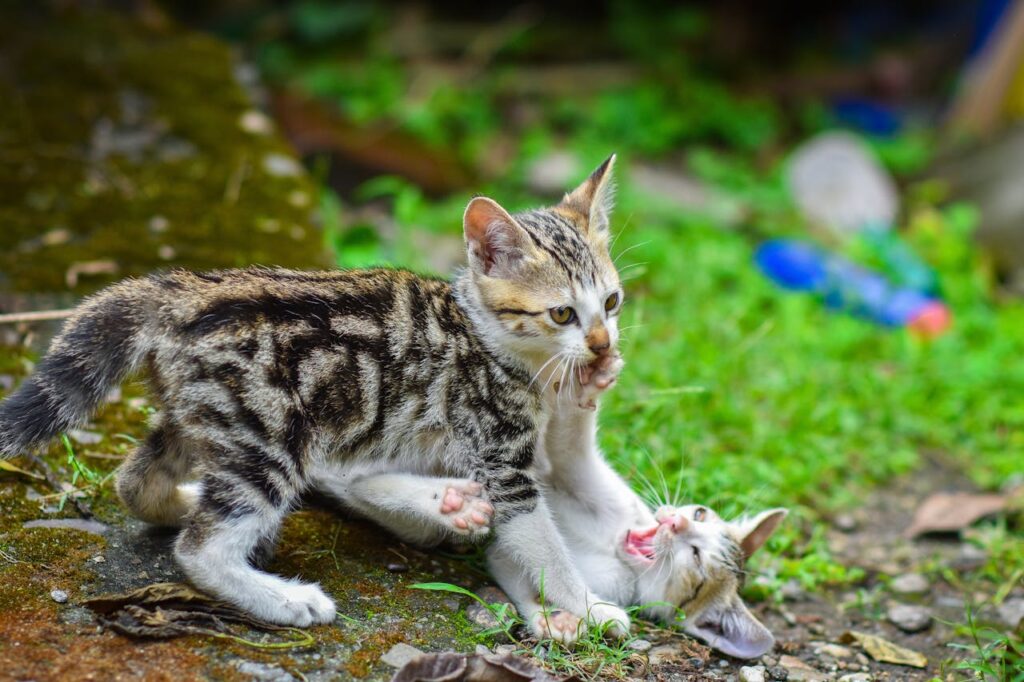
Play aggression is common in young cats and results from misdirected hunting instincts.
Redirected aggression occurs when a cat is aroused by one stimulus but attacks another target nearby.
Pain-induced aggression arises when a cat is physically uncomfortable or injured.
Fear-Based Aggression Mechanism
Fear is one of the strongest triggers of aggressive behavior in cats.
When a cat perceives danger, its body activates a fight-or-flight response.
If escape is not possible, the fight response becomes dominant.
This leads to hissing, growling, swatting, or biting.
The cat is not trying to harm intentionally but is attempting to increase distance from the threat.
Territorial Aggression and Resource Protection
Cats are highly territorial animals, even in domestic environments.
They establish mental maps of safe zones, feeding areas, and resting spaces.
When another animal or human invades these perceived zones, aggression may be triggered.
This behavior is rooted in evolutionary survival systems where territory equals access to food and safety.
Play Aggression and Misguided Hunting Instincts
Play aggression is often seen in kittens and young adult cats.
It occurs when hunting instincts are activated without proper target regulation.
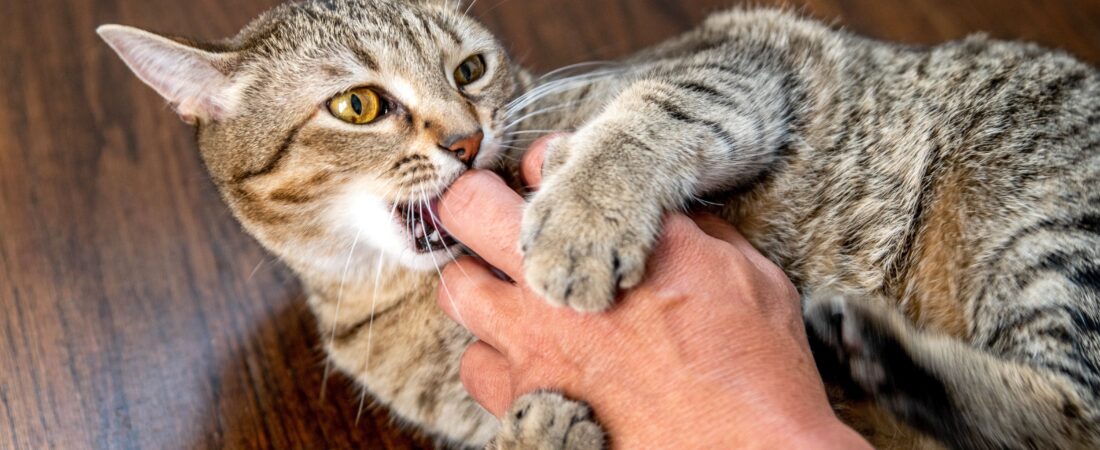
Biting hands, ambushing feet, or sudden pouncing during play are common examples.
This is not true hostility but an overflow of predatory energy.
Without proper redirection, this behavior can become problematic in adulthood.
Redirected Aggression Explained
Redirected aggression happens when a cat becomes stimulated by one source but cannot access it.
For example, seeing another cat outside a window may trigger arousal.
If the cat cannot reach the target, it may attack a nearby human or animal instead.
This is a confusion of emotional arousal and physical outlet.
It is one of the most misunderstood forms of feline aggression.
Pain-Induced Aggression
When a cat is in pain, its tolerance for touch and interaction decreases significantly.
Even normally friendly cats may become aggressive when handled in sensitive areas.
This behavior serves as a protective mechanism to prevent further injury.
Sudden aggression in a calm cat should always be evaluated for medical issues.
Early Warning Signals of Aggression
Cats often show subtle signals before escalating to aggression.
Dilated pupils, tail twitching, ear flattening, and body stiffening are key indicators.
Growling or low vocalizations may also occur before physical action.
Recognizing these signals allows prevention before escalation.
The Role of Overstimulation
Overstimulation is a common trigger in domestic cats.
Excessive petting or prolonged interaction can overwhelm sensory processing.
This leads to sudden defensive responses such as biting or scratching.
Each cat has a threshold for sensory input tolerance.
Aggression in Multi-Cat Households
In environments with multiple cats, social hierarchy plays a major role.
Competition for resources such as food, litter boxes, and resting spots can lead to conflict.
Subtle dominance behaviors may escalate into physical aggression if not managed properly.
Proper resource distribution reduces tension significantly.
Human Misinterpretation of Aggression
Humans often interpret feline aggression as anger or spite.
However, cats do not process emotions through moral reasoning.
Their aggression is situational and reactive, not symbolic or intentional revenge.
Misunderstanding this leads to ineffective behavioral responses.
Stress Accumulation and Aggression Triggers
Chronic stress lowers a cat’s tolerance threshold.
Environmental instability, lack of stimulation, or frequent disturbances contribute to heightened reactivity.
Small triggers can then produce disproportionate aggressive responses.
Reducing stress is key to long-term behavior control.
Environmental Modification for Behavior Control
Changing the environment is more effective than punishment.
Providing vertical spaces, hiding zones, and multiple resource stations reduces competition and stress.
Predictable routines also stabilize emotional responses.
A well-structured environment significantly reduces aggression frequency.
Behavioral Redirection Techniques
Redirecting energy into play is an effective method for reducing aggression.
Interactive toys simulate hunting behavior and allow safe energy release.
Timed play sessions help regulate predatory instincts.
Consistency in redirection strengthens long-term behavioral control.
Reinforcement and Learning Patterns
Cats learn through consequences rather than moral understanding.
If aggressive behavior results in retreat of a stimulus, it may be unintentionally reinforced.
Understanding reinforcement loops is essential in modifying behavior.
Positive reinforcement for calm behavior is more effective than punishment.
Socialization and Early Development
Early life experiences strongly influence aggression levels in adulthood.
Kittens exposed to varied environments and gentle handling tend to be more tolerant.
Poor socialization can lead to fear-based aggression later in life.
Critical development periods shape long-term behavioral tendencies.
Aggression Toward Humans
Aggression toward humans is usually linked to fear, overstimulation, or miscommunication.
Sudden touch, loud noise, or invasive interaction can trigger defensive reactions.
Respecting boundaries and reading body language reduces incidents significantly.
Long-Term Behavior Management
Managing aggression requires consistency, patience, and environmental awareness.
Behavioral patterns cannot be changed instantly but can be reshaped over time.
Combining enrichment, routine, and observation leads to stable improvement.
FAQ
Why do cats suddenly become aggressive?
Usually due to fear, overstimulation, or redirected energy.
Is cat aggression dangerous?
It can cause injury, but it is typically defensive rather than malicious.
Can aggression be trained out of cats?
It can be managed and reduced through behavior modification techniques.
Why does my cat bite during petting?
This is often due to overstimulation.
Do cats get angry like humans?
No, their aggression is instinct-based rather than emotional anger.
Conclusion
Cat aggression is a complex behavioral system rooted in instinct, environment, and sensory overload. It is not random hostility but a structured response to perceived threats or overstimulation. Understanding its triggers allows for effective prevention and long-term behavior management, leading to safer and more balanced human-cat relationships.