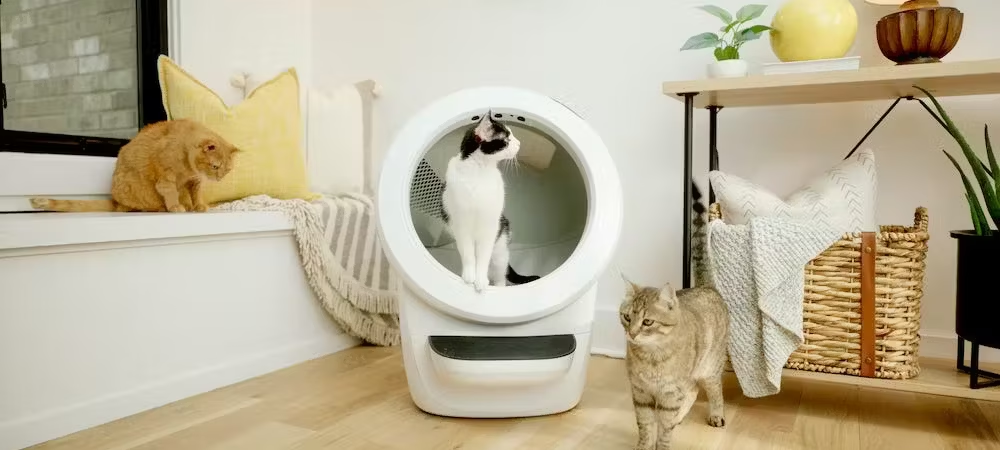
Why Multi-Cat Homes Need Automatic Litter Boxes
Managing litter boxes in homes with multiple cats can quickly become difficult. Traditional litter boxes require constant scooping, odor control, and regular cleaning throughout the day. When several cats share the same litter area, waste builds up much faster, creating unpleasant smells and hygiene problems.
Automatic litter boxes help solve these issues by cleaning waste automatically after each use. These systems reduce odor, save time, and create a cleaner environment for both cats and owners.
Many cats also prefer clean litter spaces. Dirty litter boxes can lead to accidents outside the box, stress, and territorial problems between cats. Self-cleaning litter boxes maintain better cleanliness throughout the day.
For busy cat owners, automatic litter systems can significantly reduce daily maintenance while improving overall home hygiene.
Litter-Robot 4
The Litter-Robot 4 is one of the most advanced automatic litter boxes available for multi-cat households. It uses smart sensors and a rotating cleaning system to separate waste from clean litter automatically.
This litter box has a spacious interior that comfortably accommodates large cats as well as homes with multiple pets. After a cat exits, the machine rotates and filters waste into a sealed drawer below.
Odor control is one of its strongest features. The enclosed waste compartment helps reduce unpleasant smells inside the home.
The Litter-Robot 4 also connects to smartphone apps, allowing owners to monitor usage, waste levels, and cleaning cycles remotely.
Although it is more expensive than many alternatives, its convenience and reliability make it popular among serious cat owners.
PetSafe ScoopFree Automatic Litter Box
The PetSafe ScoopFree system is another popular option for multi-cat homes. Instead of traditional litter, it uses disposable crystal litter trays that absorb moisture and reduce odors effectively.
This automatic litter box rakes waste into a covered compartment after use. The crystal litter dries solid waste quickly, helping reduce bacterial growth and smell.
One major advantage is low maintenance. Disposable trays can last several weeks depending on the number of cats using the system.
PetSafe ScoopFree models are generally quieter than some rotating litter systems, which may help nervous cats adjust more comfortably.
However, replacement crystal trays create recurring costs over time.
CatGenie Self-Washing Litter Box
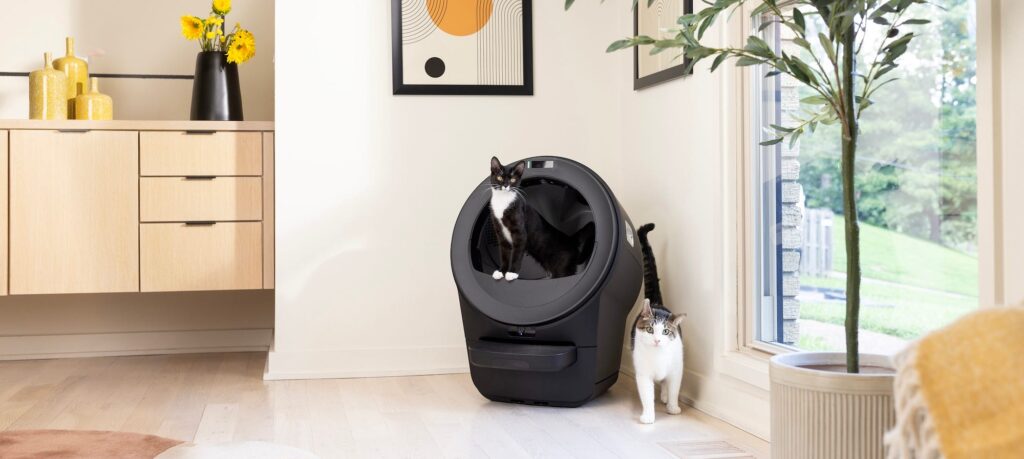
The CatGenie stands out because it works more like a miniature toilet system for cats. Instead of disposable litter, it uses washable granules that are automatically cleaned and dried.
After each use, the system flushes waste away and sanitizes the reusable litter granules.
This design eliminates the need for traditional scooping and reduces litter waste significantly.
The CatGenie is especially useful for owners seeking environmentally friendly litter solutions.
Because it requires plumbing connections, setup may be more complicated compared to standard automatic litter boxes.
Its cleaning cycle can also be noisy, which may initially scare sensitive cats.
Whisker Feeder-Robot Compatible Systems
Some cat owners prefer combining automatic litter systems with smart feeding technology. Whisker-compatible products allow integrated pet care management for busy households.
These systems often include usage tracking, weight monitoring, and mobile app notifications.
For homes with several cats, monitoring bathroom habits can help identify health problems early. Sudden changes in litter box usage may indicate illness or stress.
Smart systems provide convenience while helping owners maintain better awareness of each cat’s behavior.
Omega Paw Roll’N Clean
Although not fully automatic, the Omega Paw Roll’N Clean litter box is a simpler self-cleaning option that many multi-cat owners appreciate.
Instead of electricity, this system works manually by rolling the box onto its side. Waste separates into a pull-out tray while clean litter remains inside.
This design reduces scooping effort without requiring sensors, motors, or expensive maintenance.
It is generally quieter and more affordable than electronic systems.
However, households with many cats may still need to empty the tray frequently.
Important Features to Consider
Size and Capacity
Multi-cat homes require larger litter boxes because several cats may use them throughout the day.
A small automatic box may fill quickly, causing odor problems and reducing comfort for cats.
Large-capacity waste drawers and spacious interiors are important for maintaining hygiene.
Odor Control
Strong odor control systems are essential in homes with multiple cats.
Carbon filters, sealed waste compartments, and crystal litter technologies can significantly reduce unpleasant smells.
Regular maintenance still remains necessary even with advanced odor-control systems.
Noise Level
Some automatic litter boxes make loud sounds during cleaning cycles. Sensitive cats may become frightened by sudden movement or noise.
Quieter systems are often easier for shy or anxious cats to accept.
Gradual introduction helps cats adjust more comfortably to automatic systems.
Safety Sensors
Safety features are extremely important in automatic litter boxes.
Modern systems include motion sensors that stop cleaning cycles when cats are nearby.
Reliable sensors prevent accidents and improve safety for curious pets.
Maintenance Requirements
Some systems require disposable trays while others use washable litter.
Owners should consider long-term maintenance costs, cleaning frequency, and replacement supplies before purchasing.
Benefits of Automatic Litter Boxes
Automatic litter boxes save time by reducing manual scooping responsibilities.
They help maintain cleaner environments and reduce unpleasant smells.
Consistently clean litter encourages healthy litter habits and reduces accidents outside the box.
Some smart systems also provide health tracking insights for multiple cats.
Busy owners especially benefit from the convenience and reduced daily cleaning effort.
Challenges of Automatic Litter Boxes
Some cats need time to adapt to moving litter systems.
Expensive models may require significant upfront investment.
Mechanical failures or sensor issues occasionally occur with electronic devices.
Large units may also occupy considerable space inside small apartments.
Regular deep cleaning is still necessary even with automatic features.
Tips for Introducing Cats to Automatic Litter Boxes
Place the new litter box near the old one initially so cats can investigate comfortably.
Allow cats to explore the machine while it is turned off before activating cleaning cycles.
Using familiar litter can help reduce stress during the transition.
Positive reinforcement and patience are important because some cats adapt more slowly than others.
Never force a frightened cat into the litter box.
Best Litter Types for Automatic Systems
Different automatic litter boxes work best with specific litter types.
Clumping litter is commonly recommended for rotating systems like the Litter-Robot.
Crystal litter works best in systems designed specifically for moisture absorption.
Lightweight litters may create sensor problems in some machines.
Always follow manufacturer recommendations for best performance.
Common Mistakes Owners Make
Many owners buy litter boxes that are too small for multiple cats.
Ignoring regular maintenance can lead to odors and malfunction.
Using incorrect litter types may damage cleaning mechanisms.
Some owners also remove traditional litter boxes too quickly before cats adjust to the new system.
Patience during the transition process is important for success.
FAQ
Are automatic litter boxes safe for cats?
Yes, most modern automatic litter boxes include safety sensors that prevent operation while cats are inside.
How many litter boxes do multiple cats need?
Experts generally recommend one litter box per cat plus one extra.
Do automatic litter boxes reduce smell?
Yes, self-cleaning systems help control odor by removing waste quickly.
Can kittens use automatic litter boxes?
Some automatic systems are not recommended for very small kittens because of weight sensor limitations.
Which litter box is best for large cats?
Larger systems like the Litter-Robot 4 are usually better for big breeds and multi-cat homes.
Conclusion
Automatic litter boxes can greatly improve cleanliness, odor control, and convenience in multi-cat homes. Choosing the right system depends on factors such as household size, budget, litter preference, and cat personality. With proper introduction and maintenance, self-cleaning litter boxes can create a healthier and more comfortable environment for both cats and owners.