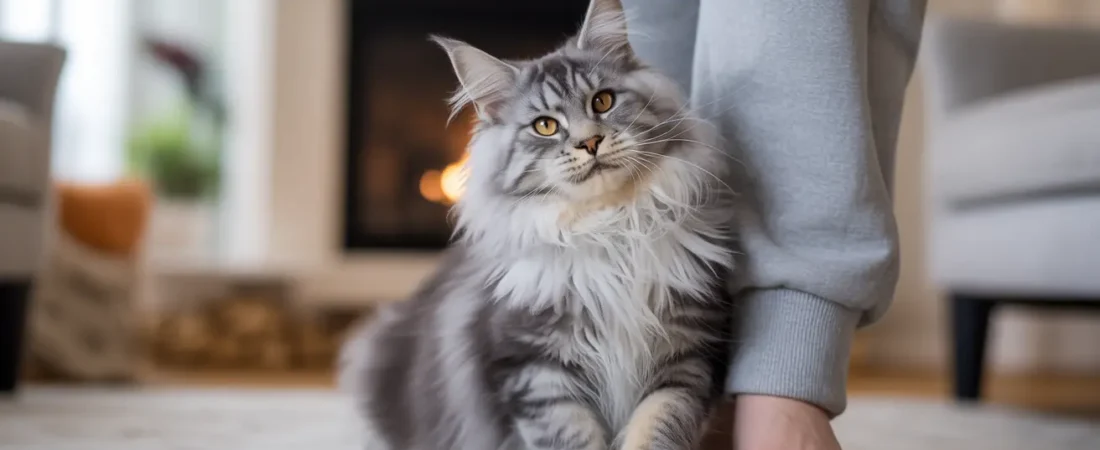
How Cats Communicate Without Words
Cat behavior is a complex system of signals, instincts, and learned responses. Unlike humans, cats do not rely on spoken language. Instead, they communicate through body posture, vocalization, scent marking, and subtle behavioral cues.
Every movement a cat makes has meaning, even when it appears random to human observers. Ear position, tail movement, eye shape, and body tension all contribute to a silent communication system that other cats understand instinctively.
Domestic cats also adapt their communication specifically for humans, often developing unique vocal patterns and behaviors to interact with their owners.
Understanding these signals helps prevent misunderstandings and strengthens the bond between cats and humans.
Tail Language and Emotional States
A cat’s tail is one of the most expressive tools in its body language system.
A tail held upright usually indicates confidence, friendliness, and a willingness to interact. Cats often approach humans with an upright tail as a greeting gesture.
A slowly swaying tail can indicate curiosity or mild focus, especially when the cat is observing something interesting.
A rapidly flicking or thumping tail often signals irritation, overstimulation, or frustration. In this state, a cat may prefer to be left alone.
A puffed-up tail indicates fear or defensive aggression, often triggered by sudden threats or unfamiliar stimuli.
Ear Position as a Mood Indicator
A cat’s ears constantly shift to reflect its emotional and environmental awareness.
Forward-facing ears show curiosity and engagement with surroundings.
Slightly sideways ears can indicate uncertainty or cautious observation.
Flattened ears pressed against the head signal fear, stress, or aggression readiness.
Cats use ear positioning not only for communication but also for enhanced sound detection in different environments.
Eye Behavior and Emotional Signals
Cats use their eyes to express trust, fear, curiosity, and affection.
Slow blinking is a strong sign of trust and relaxation. Cats rarely close their eyes fully around threats, so slow blinking indicates comfort.
Wide, dilated pupils can indicate excitement, fear, or low-light adaptation.
A direct, unblinking stare may signal dominance, challenge, or deep focus.
Looking away frequently can indicate submission or avoidance behavior.
Vocal Communication in Cats
Cats use a wide range of vocal sounds including meows, chirps, trills, growls, and hisses.
Meowing is primarily used for communication with humans rather than other cats.
Soft, short meows often indicate greetings or requests.
Long, loud meows may signal urgency, hunger, or attention-seeking behavior.
Chirping or trilling sounds are often associated with excitement or friendly interaction.
Growling and hissing are defensive signals used when a cat feels threatened.
Scent Marking Behavior
Cats rely heavily on scent communication to define territory and relationships.
They have scent glands located on their cheeks, paws, and tail base.
When a cat rubs against furniture or humans, it is marking them with familiar scent markers.
This behavior creates a sense of security by making the environment smell familiar.
Urine spraying is a more intense form of territorial marking, often triggered by stress, competition, or hormonal factors.
Kneading Behavior Explained
Kneading is a rhythmic pushing motion made with a cat’s front paws.
This behavior originates from kittenhood, when kittens knead their mother’s belly to stimulate milk flow.
In adult cats, kneading is associated with comfort, relaxation, and emotional security.
Cats often knead soft surfaces such as blankets, cushions, or human laps.
Purring during kneading usually indicates deep contentment.
Play Behavior and Hunting Instincts
Play is a direct expression of hunting instincts in domestic cats.
Stalking, chasing, pouncing, and biting behaviors seen in play mimic real predatory sequences.
Even well-fed cats continue to play because the behavior is instinct-driven rather than hunger-driven.
Play helps cats develop coordination, timing, and physical fitness.
Interactive toys such as feathers, balls, and moving objects activate these instincts effectively.
Aggression in Cats and Its Causes
Aggression in cats is usually a response to fear, pain, overstimulation, or territorial conflict.
Fear-based aggression occurs when a cat feels threatened and cannot escape.
Play aggression is common in young cats that have not learned bite control.
Redirected aggression happens when a cat is stimulated by an external trigger but cannot reach it.
Pain-related aggression may appear suddenly in previously calm cats and should be medically evaluated.
Social Behavior and Independence
Cats are often misunderstood as completely solitary animals, but they are actually flexible social creatures.
Some cats enjoy strong social bonds with humans and other animals, while others prefer independence.
Social structure depends on early life experiences, environment, and personality.
Cats living in multi-cat households may form complex social hierarchies or simply coexist peacefully without strong bonds.
Stress Signals in Cat Behavior
Stress in cats often appears through subtle behavioral changes.
Excessive hiding, reduced grooming, loss of appetite, and increased vocalization are common signs.
Overgrooming or fur loss may also indicate anxiety.
Stress triggers can include environmental changes, new pets, loud noises, or inconsistent routines.
Long-term stress can lead to behavioral disorders or health problems.
Territory and Environmental Control
Cats are highly territorial animals that prefer predictable environments.
They often establish mental maps of safe zones, feeding areas, and resting spots.
Changes in furniture placement or unfamiliar objects can temporarily disrupt their sense of security.
Providing vertical spaces such as shelves and cat trees helps expand perceived territory.
Sleep Behavior in Cats
Cats sleep for long periods, often between 12 to 16 hours per day.
This sleep pattern is linked to their evolutionary need to conserve energy for hunting.
Cats cycle between deep sleep and light rest, remaining partially alert even while resting.
Safe and comfortable environments increase sleep quality and duration.
Human Interaction Adaptation
Domestic cats often modify their behavior based on human responses.
They learn which actions result in food, attention, or play.
Some cats develop specific vocalizations or routines tailored to individual owners.
This adaptive behavior demonstrates high intelligence and learning ability.
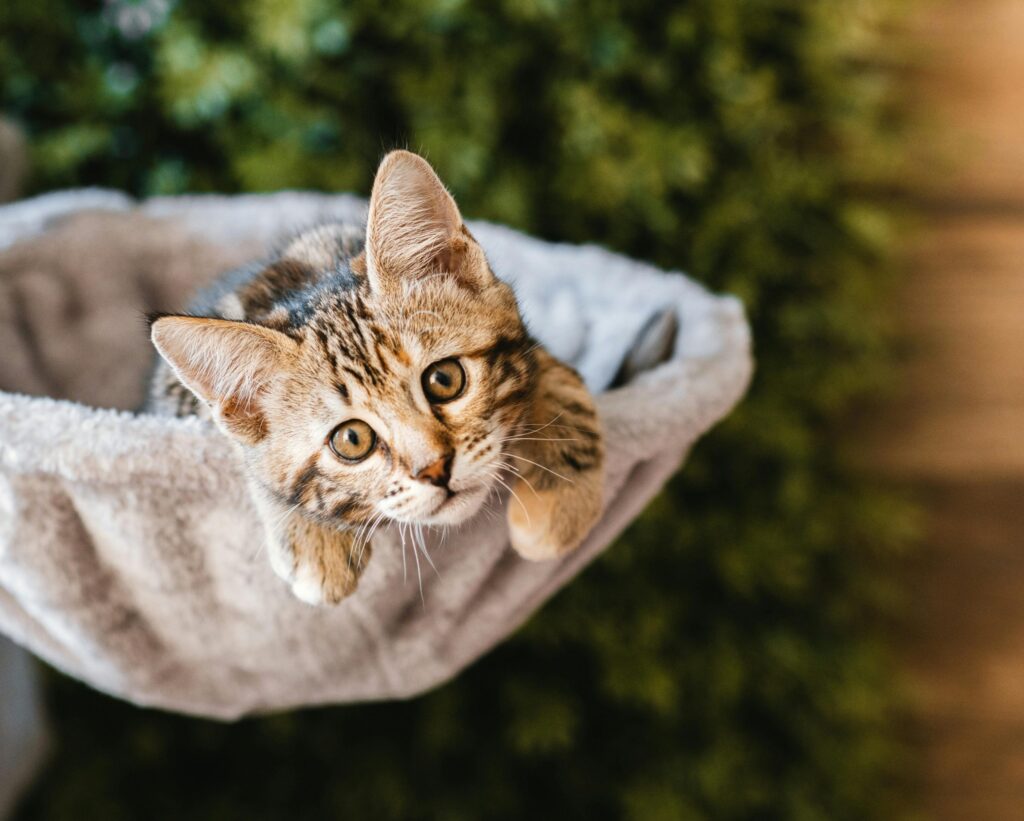
Common Misinterpretations of Cat Behavior
Many human interpretations of cat behavior are incorrect.
For example, ignoring humans is often mistaken for dislike, when it may actually indicate comfort or independence.
Sudden biting during petting is usually a sign of overstimulation rather than aggression.
Understanding context is essential for accurate interpretation.
Building Better Behavior Through Environment
Positive behavior in cats is strongly influenced by environment.
Enrichment activities, consistent routines, and safe spaces reduce stress-related behaviors.
Interactive play helps redirect energy away from destructive habits.
Proper litter box placement and cleanliness also prevent behavioral issues.
FAQ
Why do cats behave differently from each other?
Each cat has a unique personality shaped by genetics and early experiences.
Why does my cat suddenly bite me while playing?
This is usually overstimulation or play aggression.
Do cats understand human emotions?
Cats can recognize human emotional tone and behavior patterns.
Why does my cat ignore me sometimes?
Independence and focus on environment are normal feline traits.
Can cat behavior be trained?
Yes, through positive reinforcement and consistent routines.
Conclusion
Cat behavior is a complex system of instinct, communication, and learned adaptation. Understanding tail language, vocal signals, social behavior, and stress indicators helps owners build stronger relationships with their cats. When properly understood, feline behavior reveals a highly intelligent, emotionally responsive, and adaptable companion species.