Understanding a Cat’s Hunting Instinct
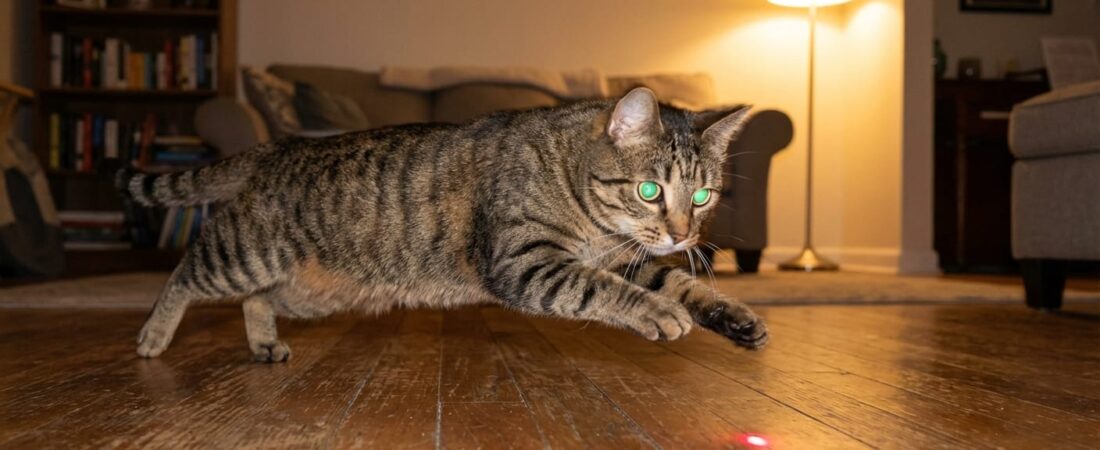
Cats are natural hunters with strong instincts that remain active even in indoor environments. Chasing movement is deeply connected to survival behaviors developed over thousands of years.
Small moving objects immediately attract a cat’s attention because they resemble prey such as insects, birds, or rodents.
Laser pointers trigger these hunting instincts perfectly because the moving light behaves unpredictably.
Cats instinctively stalk, chase, pounce, and attack anything that moves quickly across floors or walls.
This behavior is completely natural and healthy when managed properly.
Why Laser Pointers Are So Exciting for Cats
Laser pointers move rapidly and unpredictably, which stimulates a cat’s prey drive intensely.
Unlike many toys, laser dots can change direction instantly and move at high speed.
The fast movement keeps cats mentally focused and physically active.
Many indoor cats become extremely excited during laser play sessions because the movement closely imitates escaping prey.
Cats enjoy the challenge of tracking and attempting to capture the light.
The constant motion also helps energetic cats release excess energy.
Physical Benefits of Laser Play
Laser toys encourage running, jumping, and fast movement.
Indoor cats often struggle with inactivity and weight gain, especially in smaller homes.
Laser play provides an effective form of exercise that improves muscle tone and coordination.
Regular activity supports healthy joints, heart function, and weight management.
Short but active play sessions can significantly improve physical health in sedentary indoor cats.
Laser games are especially useful for overweight or highly energetic cats.
Mental Stimulation for Indoor Cats
Mental stimulation is just as important as physical exercise.
Cats need opportunities to solve problems, focus attention, and express natural hunting behaviors.
Laser toys create mental engagement by forcing cats to track movement carefully.
Intelligent cats especially enjoy the challenge of predicting motion.
Interactive play sessions also reduce boredom and stress.
Mentally stimulated cats often display fewer destructive behaviors such as scratching furniture or nighttime meowing.
The Frustration Problem With Laser Toys
Although laser pointers can be entertaining, they also create a potential problem.
Unlike physical prey, laser dots cannot actually be caught.
Some cats become frustrated because they never achieve the satisfaction of physically capturing the target.
Repeated unsuccessful hunting experiences may increase stress or obsessive behaviors in certain cats.
Signs of frustration may include searching obsessively for the light after play ends.
Not every cat reacts negatively, but owners should still use laser toys responsibly.
How to Use Laser Pointers Properly
The best way to prevent frustration is by ending laser sessions with a real toy or treat.
After chasing the laser for several minutes, owners should direct the light toward a toy the cat can physically catch.
Treat rewards can also help complete the hunting sequence.
Cats naturally prefer a full hunting cycle that includes stalking, chasing, catching, and rewarding.
Allowing successful captures creates a more emotionally satisfying experience.
Short play sessions are usually better than overly long sessions.
Avoid Shining Lasers Into Eyes
Safety is extremely important during laser play.
Laser beams should never be pointed directly into a cat’s eyes because they may damage vision.
Owners should keep laser movement low to the ground and avoid reflective surfaces.
Children should also be supervised when using laser toys with pets.
Choosing pet-safe laser products helps reduce risks.
Why Some Cats Love Lasers More Than Others
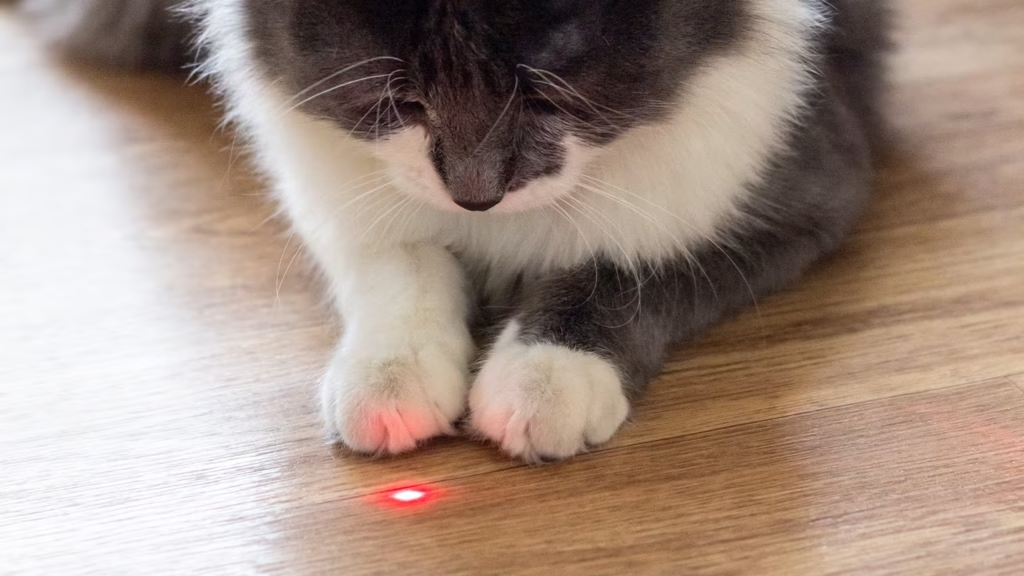
Every cat has a different personality and prey drive.
Highly energetic or playful cats often become obsessed with laser games.
Older or calmer cats may show less interest.
Breed traits also influence activity levels.
Bengals, Abyssinians, and Siamese cats are often especially enthusiastic during chase games.
Some cats simply prefer physical toys they can bite and carry.
Laser Toys for Kittens
Kittens usually enjoy laser toys because they are naturally curious and energetic.
Laser play helps young cats develop coordination and reflexes.
However, kittens should also have access to physical toys they can wrestle and capture.
Balanced play experiences help prevent frustration.
Short sessions are ideal because kittens tire quickly.
Alternatives to Laser Toys
Feather wands, moving mice, ball tracks, and puzzle toys also provide excellent stimulation.
Many cats enjoy toys that imitate prey movement while still allowing physical capture.
Automatic motion toys are useful for independent play.
Interactive games between owners and cats strengthen emotional bonds.
Rotating different toy types keeps playtime exciting and prevents boredom.
Signs Your Cat Enjoys Laser Play
Healthy laser play usually includes relaxed body language and excitement.
Cats may crouch, wiggle their tails, sprint, and pounce enthusiastically.
After play sessions, satisfied cats often groom themselves or rest calmly.
Positive play should leave cats physically tired but emotionally relaxed.
Excessive agitation or obsessive searching afterward may indicate frustration.
Common Mistakes Owners Make
Some owners use laser pointers for too long without allowing successful captures.
Ignoring signs of overstimulation may create stress.
Shining lasers on walls or high furniture can also encourage dangerous jumping.
Using lasers as the only form of enrichment may limit healthy play variety.
Balanced stimulation is important for emotional wellbeing.
Benefits of Interactive Play With Owners
Cats often bond more strongly with owners through regular interactive play.
Shared playtime builds trust and reduces loneliness.
Play also provides opportunities for exercise and mental engagement simultaneously.
Interactive routines help cats feel emotionally secure.
Even independent cats benefit from regular positive interaction.
Can Laser Toys Cause Obsessive Behavior?
In some cases, excessive laser play may contribute to obsessive chasing behaviors.
Certain highly anxious or sensitive cats may continue searching for invisible movement after sessions end.
Combining laser games with physical toys and structured routines reduces this risk.
Owners should monitor individual behavior carefully.
If obsessive behavior appears, switching to physical prey-style toys may help.
FAQ
Do cats actually enjoy laser pointers?
Yes, most cats enjoy laser play because it stimulates natural hunting instincts.
Can laser pointers frustrate cats?
Yes, some cats become frustrated if they never successfully catch anything.
Are laser pointers safe for cats?
Yes, when used responsibly and never pointed into the eyes.
How long should laser play sessions last?
Most sessions should remain short, usually around 5 to 15 minutes.
What should I do after laser play?
Allow the cat to catch a physical toy or reward them with treats.
Conclusion
Cats chase laser pointers because the fast-moving light activates powerful hunting instincts. Laser toys provide valuable exercise and mental stimulation for indoor cats, especially when used safely and responsibly. Combining laser games with physical rewards and varied enrichment helps create satisfying play experiences while preventing frustration or obsessive behavior.