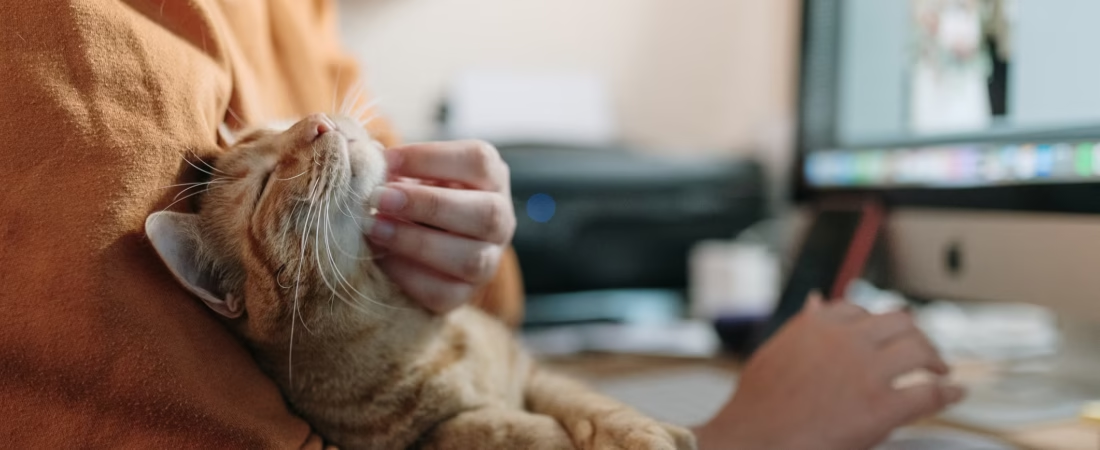
Slow Blinking Means Trust
Slow blinking is one of the clearest signs of affection in cats. When a cat looks at its owner and slowly closes its eyes, it usually means the cat feels safe and comfortable.
Cats naturally protect themselves by staying alert, so closing their eyes around someone shows trust.
Many cat owners refer to slow blinking as a “cat kiss.”
Returning slow blinks gently can help strengthen the bond between cats and humans.
Cats that frequently relax around their owners and blink slowly are usually emotionally attached.
Purring Around You
Purring often indicates happiness, comfort, and emotional security.
Cats commonly purr while sitting near trusted people, being petted, or relaxing on laps.
Although cats may also purr during stress or pain in some situations, relaxed body language combined with purring usually signals affection.
A cat that seeks physical closeness while purring is typically showing love and trust.
Some cats even greet their owners at the door while purring excitedly.
Following You Everywhere
Cats that follow owners from room to room often enjoy companionship and interaction.
This behavior shows curiosity, emotional attachment, and a desire to remain close.
Highly social breeds like Siamese and Ragdolls are especially known for shadowing their humans throughout the day.
Cats that sit nearby while owners work, cook, or relax are often expressing affection through presence.
Even independent cats may quietly follow trusted people around the home.
Kneading on You
Kneading is a comforting behavior that begins during kittenhood.
When cats knead blankets, beds, or human laps, they usually feel safe and content.
Cats often knead people they trust deeply.
The rhythmic paw movement is linked to positive feelings associated with nursing and comfort.
Purring and relaxed body posture during kneading are strong signs of emotional attachment.
Head Butting and Face Rubbing
Cats have scent glands around their cheeks, forehead, and chin.
When cats rub their faces against people, they are mixing scents and marking trusted individuals as part of their social group.
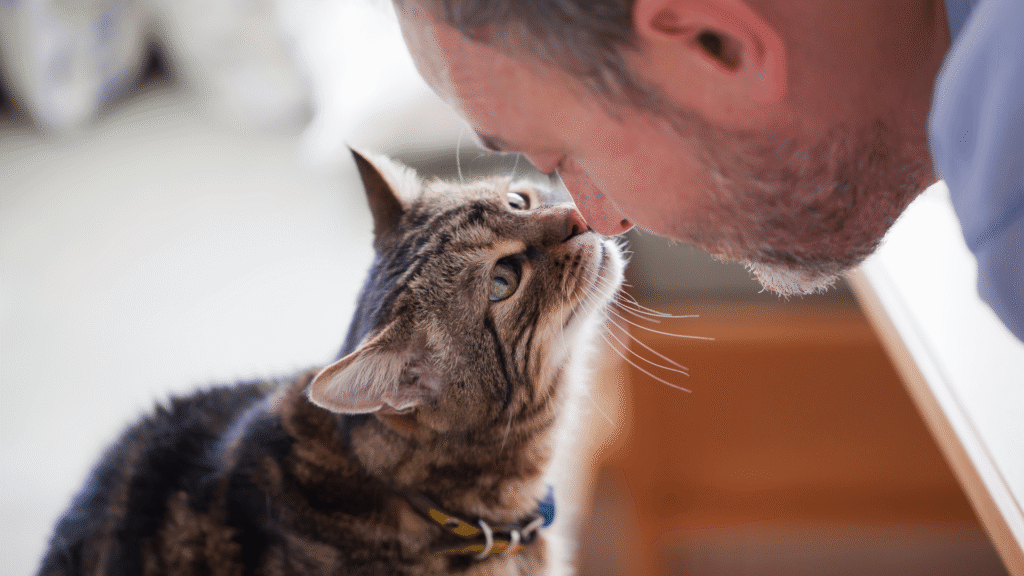
Head butting, also called bunting, is a major sign of feline affection.
Cats usually reserve this behavior for people they feel comfortable around.
Face rubbing can also occur on furniture, blankets, and favorite objects.
Sleeping Near You
Cats are naturally cautious animals and prefer sleeping in safe environments.
A cat that chooses to sleep beside or near its owner is showing trust.
Sleeping exposes cats to vulnerability, so they typically rest only in places where they feel secure.
Some cats sleep directly on their owner’s lap, chest, or bed because they enjoy warmth and companionship.
Others simply prefer staying nearby while resting.
Bringing You “Gifts”
Some cats bring toys, socks, or even hunted animals to their owners.
Although this behavior may seem strange, it often reflects affection and instinct.
Cats may view their humans as family members and attempt to share resources or demonstrate hunting success.
Indoor cats commonly bring toy mice or small household objects instead of prey.
While not always pleasant, gift-giving is usually meant positively from the cat’s perspective.
Exposing Their Belly
A cat showing its belly is often a sign of trust.
The stomach area is vulnerable, so exposing it means the cat feels relaxed and safe.
However, belly exposure does not always mean the cat wants belly rubs.
Some cats may react defensively if touched there despite showing trust.
Understanding individual preferences helps avoid misunderstandings.
Relaxed belly exposure combined with stretching and purring usually indicates contentment.
Grooming You
Cats groom individuals they consider part of their social group.
Licking hands, hair, or skin is a sign of bonding and affection.
Mother cats groom kittens for comfort and hygiene, and adult cats continue social grooming with trusted companions.
Cats may also gently nibble while grooming.
This behavior often reflects closeness and emotional connection.
Tail Position Reveals Emotions
A cat’s tail can communicate affection clearly.
Cats approaching with upright tails usually feel happy and confident.
A gently curved tail tip often signals friendliness.
Some affectionate cats wrap their tails around their owners similarly to a hug.
Understanding tail language helps owners recognize positive emotional states.
Greeting You at the Door
Cats that greet owners when they arrive home are often strongly bonded.
Some cats meow excitedly, rub against legs, or follow owners immediately after they enter.
Greeting behavior shows recognition, attachment, and excitement.
Highly social cats may wait near doors or windows before their owners return.
Soft Meows and Conversations
Cats communicate differently with humans than with other cats.
Many affectionate cats develop special vocalizations for their owners.
Soft chirps, trills, and gentle meows often indicate friendly interaction.
Some cats become very talkative around people they trust.
Paying attention to tone and body language helps interpret emotional meaning.
Playing With You
Play strengthens bonds between cats and humans.
Cats that invite owners to play often feel comfortable and emotionally connected.
Interactive games mimic hunting behavior and provide mental stimulation.
Cats may bring toys to owners or wait expectantly for interaction.
Shared playtime improves trust and reduces boredom.
Relaxed Body Language
Relaxed posture is one of the strongest signs of feline comfort.
Cats that stretch out, expose their sides, or sleep deeply around owners usually feel safe.
Flattened ears, tense muscles, and puffed fur indicate stress instead.
Understanding body language helps owners recognize emotional wellbeing.
Affectionate cats often remain calm and relaxed in familiar company.
Why Some Cats Show Love Differently
Every cat has a unique personality.
Some cats display affection openly through cuddling and vocalization, while others show love more subtly.
Independent cats may prefer sitting nearby rather than constant physical contact.
Past experiences, breed traits, and socialization all influence behavior.
Even quiet or reserved cats can form deep emotional bonds with owners.
Building a Stronger Bond With Your Cat
Respecting a cat’s boundaries helps strengthen trust.
Gentle handling, regular play, and consistent routines create emotional security.
Positive reinforcement and patience encourage affectionate behavior naturally.
Providing safe environments and enrichment improves confidence and happiness.
Cats often become more loving when they feel understood and secure.
Common Mistakes Owners Make
Some owners force interaction when cats want space.
Ignoring body language may lead to stress or defensive behavior.
Punishment damages trust and weakens emotional bonds.
Lack of playtime and stimulation can also reduce social interaction.
Healthy relationships require patience and understanding of feline communication.
FAQ
How do cats show affection to humans?
Cats show affection through purring, slow blinking, rubbing, following, grooming, and sleeping nearby.
Do cats love their owners?
Yes, many cats form strong emotional attachments and recognize trusted humans as important companions.
Why does my cat sleep beside me?
Cats sleep near people they trust because they feel safe and comfortable.
What does it mean when a cat headbutts you?
Headbutting is a sign of affection and scent marking.
Can shy cats still love their owners?
Yes, shy cats often show affection in subtle ways such as staying nearby or slow blinking.
Conclusion
Cats express love and trust through many behaviors including purring, slow blinking, following, grooming, kneading, and sleeping nearby. Understanding these signs helps owners recognize emotional bonds and build stronger relationships with their feline companions. Every cat shows affection differently, but trust, comfort, and companionship remain at the center of feline love.