Cats Naturally Form Strong Bonds With Humans
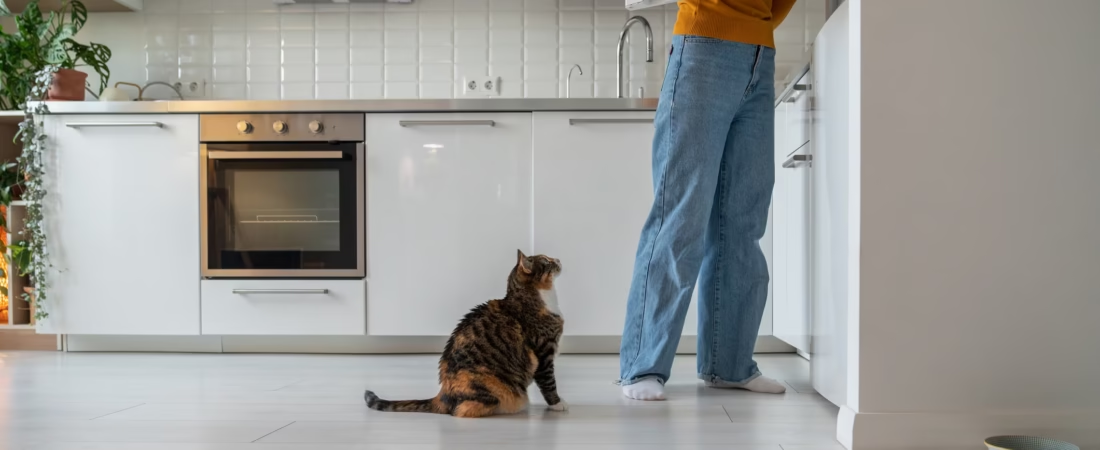
Cats are often misunderstood as distant and independent animals, but many cats develop deep emotional connections with their owners. When a cat follows someone around the house constantly, it is usually a sign of trust and attachment.
Domestic cats view their owners as important members of their social group. They feel comfortable and safe around familiar humans, especially people who feed them, play with them, and provide affection daily.
Some cats become highly attached because they were raised in environments where human interaction was frequent from a young age. Kittens that receive regular attention often grow into affectionate adult cats.
Following behavior can also be linked to routine. Cats quickly learn feeding schedules, sleeping habits, and household activities. They may follow owners simply because they associate them with positive experiences.
Many cats also enjoy companionship. While cats are more independent than dogs, they still appreciate spending time near trusted humans.
Your Cat May Want Attention
Attention-seeking is one of the most common reasons cats follow people everywhere. Some cats enjoy physical affection, petting, talking, or simply sitting near their owners.
Cats often learn that following their owners results in rewards such as treats, cuddles, or playtime. Over time, this behavior becomes part of their daily routine.
Certain cat breeds are naturally more social and affectionate. Breeds like Ragdolls, Siamese cats, and Maine Coons are known for closely following their humans around the house.
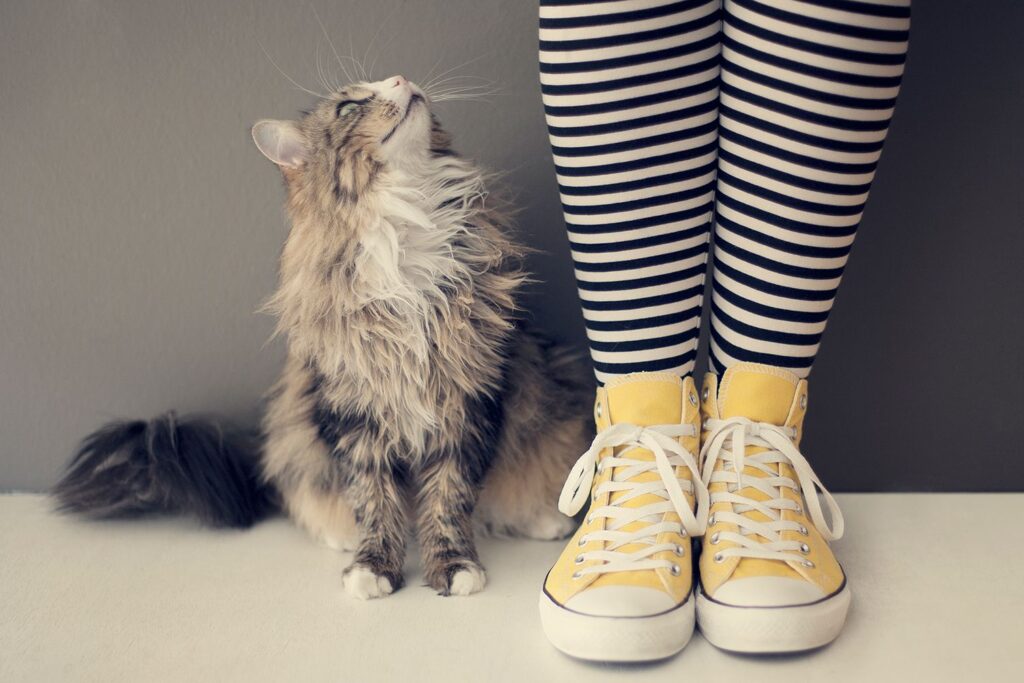
If your cat rubs against your legs, meows softly, or jumps beside you while following, these are usually signs they want interaction.
Ignoring a social cat for long periods may increase clingy behavior. Spending dedicated time playing and bonding with your cat can help satisfy their social needs.
Hunger and Feeding Expectations
Many cats become professional food reminders. If your cat follows you near the kitchen or during meal times, hunger may be the reason.
Cats develop strong internal clocks and remember feeding schedules accurately. They may begin following owners shortly before breakfast or dinner.
Some cats also associate certain sounds with food preparation. Opening cabinets, walking toward the kitchen, or shaking containers can immediately attract their attention.
Using automatic feeders may reduce excessive food-related following behavior. These devices help create consistent meal schedules without relying completely on the owner’s presence.
However, owners should avoid overfeeding cats simply because they appear demanding. Maintaining healthy portion sizes is essential for preventing obesity.
Curiosity Is a Natural Cat Trait
Cats are naturally curious animals. They enjoy observing movement, investigating sounds, and monitoring household activities.
When owners move around the home, cats may follow simply because they want to know what is happening. This behavior is especially common in intelligent and active breeds.
Cats are territorial creatures and like being aware of changes in their environment. Following humans helps them stay informed about activities within their territory.
Simple daily tasks such as folding laundry, cooking food, or cleaning rooms can become entertaining for curious cats.
Providing enrichment activities such as puzzle toys, climbing towers, and window perches can help satisfy their curiosity indoors.
Some Cats Experience Separation Anxiety
Although less common than in dogs, cats can also experience separation anxiety. A cat that becomes distressed when left alone may constantly follow its owner for reassurance.
Signs of separation anxiety include excessive meowing, destructive scratching, loss of appetite, or inappropriate urination when the owner leaves.
Cats that were orphaned young or experienced stressful environmental changes may be more prone to anxiety-related attachment behaviors.
Maintaining a stable routine helps reduce stress in anxious cats. Consistent feeding times, play sessions, and sleeping areas create a sense of security.
Interactive toys and calming pheromone diffusers may also help reduce anxiety when owners are away.
Your Cat Might Be Bored
Indoor cats sometimes follow their owners because they lack stimulation. Without enough physical and mental activity, cats search for entertainment.
Humans naturally become the most interesting part of the environment for bored cats. Following owners provides movement, interaction, and excitement.
Cats require regular exercise to stay healthy. Daily play sessions using feather toys, laser pointers, and climbing equipment can reduce boredom.
Rotating toys regularly also helps maintain interest. Cats often lose excitement when exposed to the same toys constantly.
Creating cat-friendly spaces near windows allows them to watch birds, people, and outdoor movement for additional stimulation.
Medical Issues Can Increase Clingy Behavior
Sudden changes in behavior should never be ignored. If a normally independent cat suddenly becomes extremely clingy, health problems could be involved.
Cats experiencing pain, discomfort, or illness sometimes seek extra comfort and reassurance from owners.
Older cats may follow people more frequently because of vision loss, hearing problems, or cognitive decline.
Hyperthyroidism, anxiety disorders, and neurological conditions can also affect behavior patterns.
If clingy behavior appears suddenly alongside appetite changes, weight loss, vomiting, or unusual vocalization, veterinary attention is recommended.
Breed Personality Differences
Certain cat breeds are naturally more attached to humans than others.
Siamese cats are famous for following owners constantly and vocalizing frequently. They enjoy social interaction and dislike isolation.
Ragdolls are affectionate “lap cats” that prefer staying close to family members throughout the day.
Maine Coons are friendly and social cats that enjoy participating in household activities.
Scottish Folds and Burmese cats also tend to form strong emotional bonds with owners.
Meanwhile, breeds like the Russian Blue and British Shorthair are often more independent while still affectionate.
How to Manage Excessive Following Behavior
If your cat’s following behavior becomes overwhelming, several strategies can help create balance.
Scheduling daily play sessions helps release energy and reduces attention-seeking behavior.
Providing interactive toys and climbing structures encourages independent activity.
Avoid rewarding excessive meowing with treats every time, as this can reinforce demanding habits.
Creating safe resting areas around the home helps cats feel secure even when owners are not nearby.
Gradually increasing independent playtime can also help reduce separation-related clinginess.
Benefits of Having an Affectionate Cat
A cat that follows its owner often provides emotional comfort and companionship.
Many cat owners enjoy the feeling of being loved and trusted by their pets. Affectionate cats can improve mood and reduce feelings of loneliness.
Following behavior also creates stronger human-animal bonds. Spending time together improves communication and understanding between cats and owners.
Cats that stay near owners may also provide entertainment through their playful personalities and curious behavior.
For many people, a loyal cat companion becomes an important part of daily life.
Common Mistakes Owners Make
Some owners misunderstand following behavior and assume their cat is always hungry. This can lead to overfeeding and weight gain.
Ignoring a social cat completely may increase attention-seeking behavior over time.
Punishing a cat for following is also ineffective and can damage trust.
Another mistake is failing to provide enough environmental enrichment for indoor cats.
Understanding the reason behind the behavior is important for responding appropriately.
FAQ
Is it normal for my cat to follow me everywhere?
Yes, many cats naturally follow their owners because of affection, curiosity, or routine.
Why does my cat follow me to the bathroom?
Cats are curious and often dislike closed doors. They may also feel secure being near trusted humans.
Are clingy cats unhappy?
Not always. Some cats are naturally affectionate, but sudden clinginess can sometimes indicate stress or illness.
Which cat breeds follow owners the most?
Siamese, Ragdoll, Maine Coon, and Burmese cats are known for highly social behavior.
How can I stop my cat from following me constantly?
Providing toys, playtime, and independent activities can help reduce excessive following behavior.
Conclusion
Cats follow their owners for many different reasons including affection, curiosity, hunger, boredom, and emotional attachment. Understanding the motivation behind the behavior helps owners respond appropriately and strengthen their bond with their pets. In most cases, a cat following its owner is a positive sign of trust and companionship.