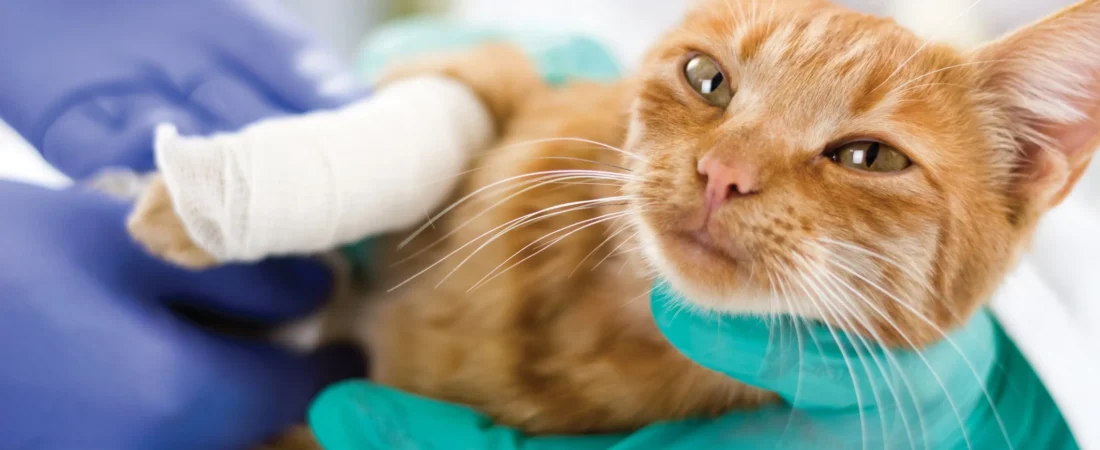
Understanding Trauma in Cats
Cat trauma refers to a lasting behavioral and emotional response triggered by a highly stressful or frightening experience. Unlike temporary fear responses, trauma can alter a cat’s long-term behavior patterns, sensitivity levels, and trust toward humans or environments.
Traumatic experiences may include abuse, abandonment, loud environmental events, attacks from other animals, or sudden changes in living conditions. The severity of trauma depends on both the intensity of the event and the cat’s individual temperament.
How Trauma Affects the Feline Brain
When a cat experiences trauma, the brain activates a strong survival response involving stress hormones such as cortisol and adrenaline.
These chemicals prepare the body for fight-or-flight reactions, but when exposure is prolonged or repeated, they can alter normal behavioral regulation.
The amygdala becomes more sensitive to threat detection, while relaxation and exploration behaviors decrease.
This leads to hypervigilance, where the cat remains alert even in safe environments.
Common Signs of Traumatized Cats
Traumatized cats often display subtle but persistent behavioral changes.
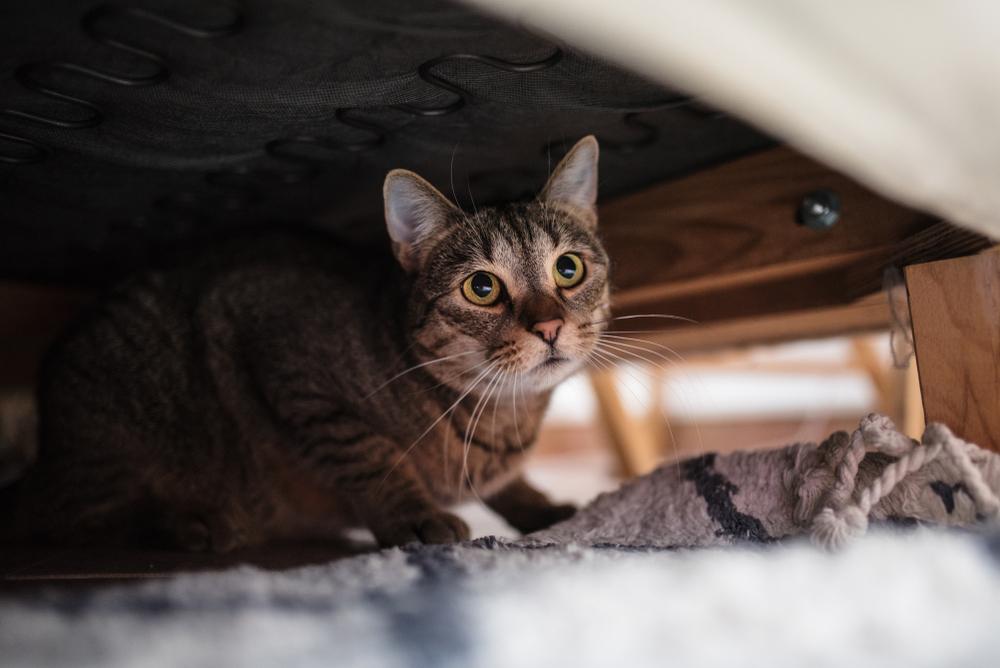
Excessive hiding is one of the most common signs, where the cat avoids open spaces even when safe.
Increased startle response to normal sounds or movements indicates heightened sensitivity.
Some cats become unusually aggressive as a defensive mechanism.
Others may withdraw socially and avoid interaction entirely.
Fear Generalization in Cats
One of the most important effects of trauma is fear generalization.
This occurs when a cat begins associating multiple unrelated stimuli with the original traumatic event.
For example, a loud noise during a specific time may lead the cat to fear similar times of day or environments.
This broadening of fear responses makes recovery more complex.
Trust Disruption and Human Interaction
Trauma can significantly affect a cat’s trust in humans.
Even previously affectionate cats may become distant or defensive after a negative experience.
The cat begins to evaluate human proximity as a potential threat instead of comfort.
Rebuilding trust requires consistent, non-threatening interaction over time.
Behavioral Shutdown State
In severe cases, cats may enter a behavioral shutdown state.
This is characterized by minimal movement, reduced exploration, and limited emotional expression.
The cat appears calm but is actually in a protective withdrawal mode.
This state is often misinterpreted as adaptation, but it reflects deep stress suppression.
Triggers That Reactivate Trauma Responses
Certain environmental or sensory cues can trigger trauma recall.
These include specific sounds, locations, smells, or visual patterns associated with the original event.
Even subtle reminders may activate stress responses, causing sudden behavioral shifts.
This is why traumatized cats may appear unpredictable in familiar environments.
Emotional Memory in Cats
Cats have strong associative emotional memory systems.
They do not recall events as narratives but as sensory-emotional links.
A smell, sound, or location can instantly trigger emotional states tied to past experiences.
This type of memory is long-lasting and difficult to erase without structured rehabilitation.
Stress Recovery Phases
Recovery from trauma occurs in gradual stages rather than sudden improvement.
The first phase is stabilization, where the cat begins to feel safe in a controlled environment.
The second phase is gradual exploration, where curiosity slowly returns.
The final phase is emotional normalization, where behavior becomes stable and predictable again.
Each phase requires time and consistency.
Safe Environment Construction
Creating a safe environment is the foundation of trauma recovery.
Cats require predictable routines, quiet spaces, and control over their environment.
Hiding spots such as enclosed beds or elevated spaces help restore security.
Minimizing sudden changes reduces stress activation.
The Role of Human Behavior in Recovery
Human interaction plays a critical role in healing trauma.
Calm, non-invasive behavior helps rebuild trust.
Avoiding sudden movements or loud vocalizations prevents re-triggering stress responses.
Consistency in daily interaction helps the cat predict human behavior safely.
Gradual Desensitization Therapy
Desensitization involves slowly exposing the cat to mild versions of stress triggers in a controlled manner.
This allows the brain to reprocess fear responses without overwhelming the system.
Over time, the cat learns that previously threatening stimuli are no longer dangerous.
This process must be extremely gradual to avoid setbacks.
Positive Reinforcement in Recovery
Reward-based systems help rebuild emotional associations.
Food rewards, gentle interaction, and play sessions encourage positive reinforcement loops.
The goal is to associate safe experiences with previously stressful contexts.
This helps overwrite negative emotional conditioning over time.
Play Therapy for Emotional Reset
Play is a powerful tool in trauma recovery.
It allows cats to regain control, confidence, and physical expression.
Interactive play simulates hunting behavior and redirects stress energy into structured activity.
Regular play sessions help restore normal behavioral rhythms.
Social Isolation vs Controlled Interaction
Some traumatized cats require temporary isolation to reduce stress exposure.
However, complete isolation can slow emotional recovery if prolonged.
Controlled, gentle interaction is more effective in rebuilding social confidence.
Balance between space and engagement is essential.
Environmental Predictability and Healing
Predictability is a key factor in emotional stabilization.
Fixed feeding times, consistent routines, and stable environments reduce uncertainty.
Cats regain confidence when they can anticipate daily events reliably.
Unpredictability should only be introduced gradually during later recovery stages.
Physical Health and Trauma Connection
Trauma can also affect physical health.
Stress may lead to reduced appetite, digestive issues, or immune suppression.
Monitoring physical health is essential during psychological recovery.
Medical support may be necessary in severe cases.
Misinterpretation of Recovery Signs
Some behaviors during recovery may appear contradictory.
Increased activity may indicate healing, not relapse.
Temporary withdrawal may be part of processing rather than regression.
Understanding behavioral fluctuations is important for proper care.
Long-Term Emotional Stability
Once recovery is complete, cats often regain normal behavior patterns.
However, some may retain mild sensitivity to specific triggers.
Long-term stability depends on continued environmental consistency and positive reinforcement.
Recovered cats can return to fully normal social and behavioral functioning.
FAQ
Can cats recover from trauma completely?
Yes, many cats recover fully with proper care and environment.
How long does cat trauma recovery take?
It varies from weeks to months depending on severity.
Should I force interaction with a traumatized cat?
No, forced interaction can worsen fear responses.
Can toys help traumatized cats?
Yes, they are useful in rebuilding confidence and engagement.
Do cats remember traumatic events forever?
They may retain emotional associations, but responses can be reduced over time.
Conclusion
Cat trauma is a deep behavioral and emotional response shaped by fear, memory, and environmental association. Recovery requires patience, consistency, and structured emotional support. With proper care, cats can rebuild trust, restore confidence, and return to stable behavioral patterns, demonstrating strong resilience within their psychological systems.