The Rise of Cats as Internet Icons
Cats dominate internet culture more than almost any other animal. From early viral videos to modern short-form content, cats consistently outperform other animals in views, shares, and engagement.
This dominance is not random. It is rooted in a combination of psychology, visual behavior patterns, and human emotional response systems.
Cats naturally display behaviors that align perfectly with what humans find entertaining, relatable, and emotionally rewarding in digital media.
Why Cats Are Perfect for Memes
Memes rely on simplicity, relatability, and emotional impact. Cats provide all three without needing explanation.
A single image of a confused cat, a dramatic stare, or an awkward pose can communicate emotion instantly.
Cats do not require context or translation. Their expressions are universally understandable across cultures.
This makes them ideal subjects for meme formats that spread rapidly online.
The Role of Expressive Faces
Cat faces are highly expressive in a way that humans easily interpret.
Wide eyes, tilted heads, and slight mouth openings are often read as surprise, confusion, or judgment.
Even when the cat is simply observing its environment, humans assign emotional meaning to its expression.
This phenomenon is called anthropomorphic projection, where humans assign human emotions to non-human subjects.
Unintentional Comedy in Cat Behavior
Cats are not trying to be funny, yet their behavior often appears comedic.
Sudden zoomies, failed jumps, or unexpected freezes create natural comedic timing.
These moments align with human humor patterns, especially surprise and contrast.
The internet amplifies these behaviors, turning ordinary actions into viral content.
The Psychology of Relatability
One of the main reasons cat memes are popular is relatability.
Cats often behave in ways that mirror human emotions such as laziness, confusion, curiosity, or frustration.
A cat refusing to move, staring blankly, or ignoring commands can feel emotionally relatable to human experiences.
This emotional mirroring increases engagement and shareability.
The Role of Cuteness in Viral Spread
Cuteness plays a major role in meme virality.
Cats trigger the baby schema response, which activates caregiving and emotional reward systems in the human brain.
When cuteness is combined with humor, the emotional effect becomes even stronger.
This combination leads to repeated viewing and sharing behavior.
Visual Simplicity and Meme Formatting
Cat images are visually simple, which makes them easy to edit, caption, and remix.
Memes require fast comprehension, and cats naturally provide clear focal points such as faces, eyes, and body posture.
Their expressions remain readable even when cropped, zoomed, or distorted.
This flexibility allows endless meme variations.
The “Reaction Face” Phenomenon
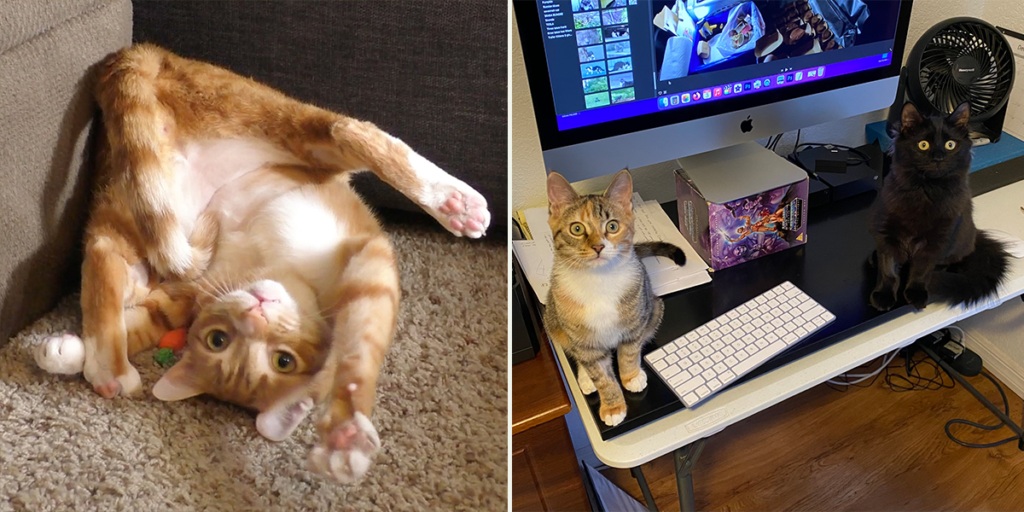
Cats often display expressions that resemble human reaction faces.
Surprised eyes, judgmental stares, and blank confusion are frequently interpreted as meme-ready emotions.
These expressions can be paired with captions to represent human thoughts or reactions.
This adaptability makes cats perfect for reaction-based internet humor.
Why Cat Videos Go Viral
Videos of cats tend to perform well because they combine motion, unpredictability, and emotional cues.
Short attention spans in digital media favor quick, engaging content.
Cats provide unpredictable movement patterns that maintain viewer interest.
Even simple actions like walking, jumping, or sitting can become viral moments.
The Role of Unexpected Behavior
Humor in cat content often comes from unpredictability.
Cats may suddenly change direction, fall, or react to invisible stimuli.
This unpredictability keeps viewers engaged because the outcome is never fully predictable.
The human brain is naturally drawn to surprise combined with safety.
Emotional Projection and Storytelling
Humans often create narratives around cat behavior.
A cat staring at a wall may be interpreted as thinking deeply or experiencing existential confusion.
A sleeping cat may be seen as tired from a long “day of responsibilities.”
These imagined stories enhance emotional connection and entertainment value.
Internet Culture and Cat Personalities
Over time, the internet has assigned personalities to different cat behaviors.
Grumpy cats, chaotic cats, sleepy cats, and curious cats all represent emotional archetypes.
These archetypes make it easier for audiences to categorize and share content.
Each personality type resonates with different emotional states in viewers.
The Role of Timing in Viral Cat Content
Timing is crucial in meme success.
A perfectly timed blink, fall, or reaction increases comedic effect.
Short clips capture peak moments of behavior, removing unnecessary context.
This enhances emotional impact and replay value.
The Dopamine Loop of Cat Content
Watching cat memes activates dopamine release in the brain.
This creates a reward loop where viewers seek more similar content.
The combination of humor, cuteness, and surprise strengthens this loop.
This is why users often spend long periods watching cat videos without realizing it.
Social Sharing Behavior
Cat content is highly shareable because it requires no explanation.
People share cat memes to express emotions, relate experiences, or simply entertain others.
This social transmission increases the viral spread of cat content across platforms.
Why Cats Outperform Other Animals Online
While many animals appear online, cats consistently dominate engagement metrics.
Dogs are popular, but cats offer more unpredictable and expressive behavior.
Cats also fit better into short-form, mobile-first content formats.
Their independence and occasional absurdity make them ideal for meme culture.
The Role of Anthropomorphism
Anthropomorphism is a key driver behind cat meme popularity.
Humans instinctively assign human traits, thoughts, and emotions to cats.
This allows viewers to interpret cat behavior as intentional or meaningful.
It transforms simple animal behavior into relatable storytelling content.
The Aesthetic Appeal of Cats
Cats have a naturally appealing visual design.
Their proportions, fur texture, and facial symmetry contribute to aesthetic satisfaction.
This visual appeal enhances their performance in image-based content.
Even static images of cats can generate strong emotional reactions.
Why Cat Memes Never Get Old
Cat memes remain popular because cat behavior is endlessly variable.
Each cat has a unique personality, ensuring constant content variation.
Unlike scripted content, cat behavior cannot be fully predicted or replicated.
This randomness keeps content fresh and engaging over time.
FAQ
Why are cats so popular on the internet?
Because they combine cuteness, humor, and unpredictable behavior.
Do cats know they are in memes?
No, cats are unaware of human internet culture.
Why do cat videos make people happy?
They trigger emotional and neurological reward systems.
Are cat memes scientifically explained?
Yes, they involve psychology, humor theory, and emotional projection.
Why do people relate to cats?
Because cat behavior often mirrors human emotions and experiences.
Conclusion
Cat meme popularity is driven by a powerful combination of psychology, visual expression, unpredictability, and emotional projection. Cats naturally display behaviors that align with human humor and emotional systems, making them ideal subjects for viral content. Their dominance in internet culture is not accidental but deeply rooted in how humans perceive and emotionally respond to animals in digital environments.